
 POWERED BY FANAR
Every great civilization is not built by one hand. It is shaped through partnership across generations, sectors, and shared ambition.
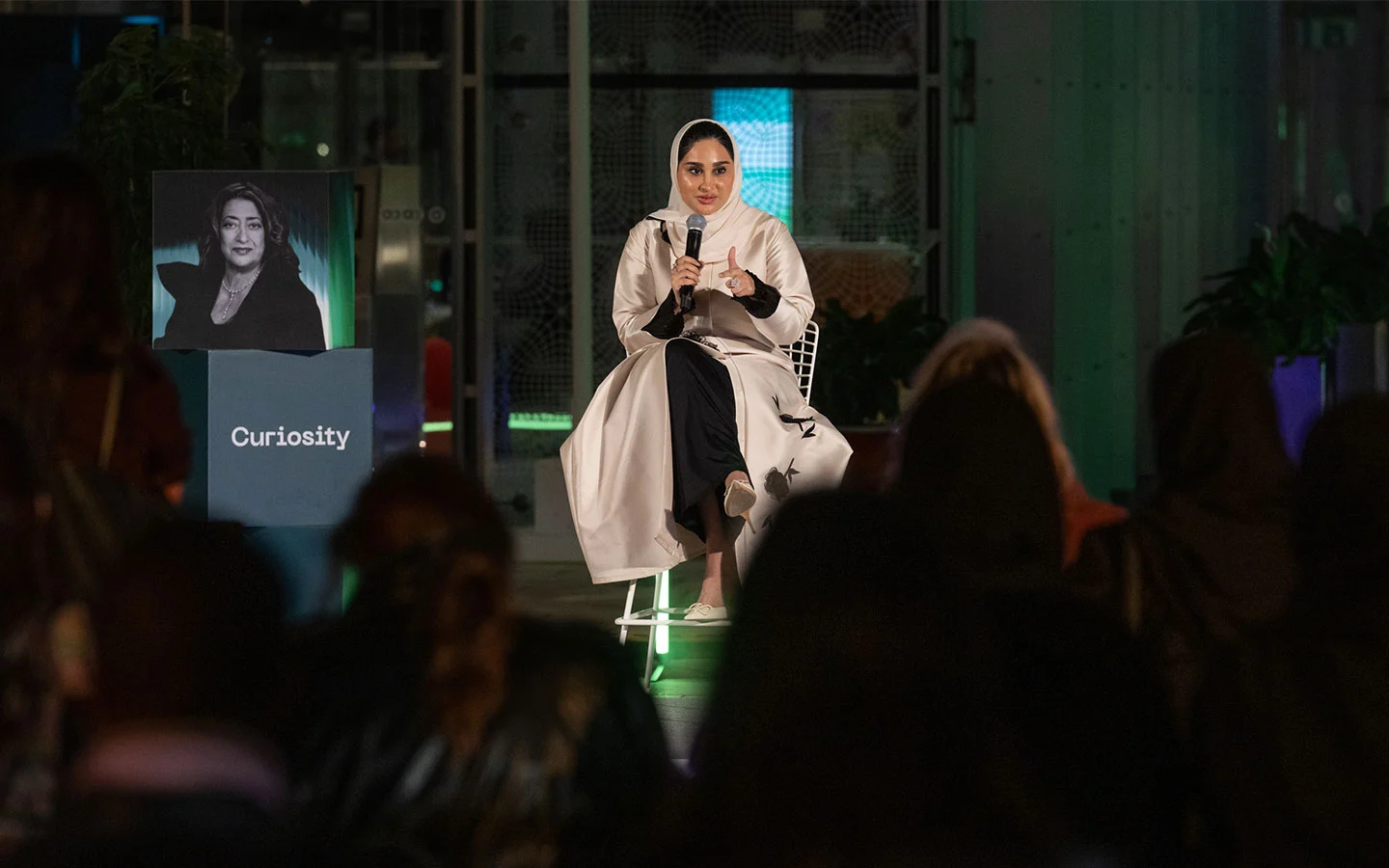
At Qatar Science Technology Park (QSTP), a member of Qatar Foundation, this belief came to life during The Future Is Female, an immersive experience that traced the journey of Arab women from foundational pioneers to today’s innovators shaping the global knowledge economy.
The event was not designed as a moment of celebration alone. It served as a powerful reminder that the future is not something we wait for, but something actively being built.
A Legacy That Began Long Before Us
Long before leadership was formally defined, Arab women were already influencing commerce, knowledge, culture, and society.
Umm al-Mu’minin Khadijah, revered as the first believer and a pioneering businesswoman, built an empire of trade that sustained an entire community and demonstrated that economic leadership has never been bound by gender.
Centuries later, Fatima Al-Fihri founded the University of Al-Qarawiyyin, establishing an institution that would educate generations and remain the world’s oldest continuously operating university.
These were not isolated achievements. They were early expressions of a legacy grounded in vision, courage, and intellectual leadership that continue to shape the present.
Where Legacy Meets Innovation
That legacy is perhaps nowhere more visible than in Qatar’s transformation into a global hub for education, research, and innovation.
Her Highness Sheikha Moza bint Nasser has demonstrated that progress is not accidental but intentionally built. Through a long-term vision for education and development, she has helped reshape the region’s academic landscape, turning national vision and ambition into globally recognized institutions and cultivating ecosystems designed for future generations.
Voices That Reshaped Culture
Scientific advancement has never been the only path to influence. Arab women have claimed their voice through literature, music, and public thought, reshaping not only what was said, but who was heard.
May Ziadeh, through her literary salons, placed women’s intellect at the center of Arab cultural life, shaping conversations that continue to resonate today.
Fadwa Tuqan transformed poetry into a language of resilience, giving voice to identity, loss, and belonging.
Umm Kulthum’s voice united an entire region, transforming song into shared memory and collective identity.
Together, they remind us that influence is not confined to laboratories or corridors of power. It is equally forged through culture.
Engineering the Future
Today, Arab women are not only imagining the future. They are engineering it.
From pioneering nuclear scientist Samira Moussa, who championed the belief that science should serve humanity, to Dina Katabi and Rana El Kaliouby, whose work in wireless technologies and artificial intelligence is redefining human-centered innovation, the direction is clear: women are actively shaping the future of discovery.
They are scientists, builders, and decision-makers. They are not waiting to be included. They are defining what comes next.
Leadership That Builds Economies
Across boardrooms and investment ecosystems, Arab women are reshaping the architecture of business itself.
Leaders such as Lubna Olayan and Leena Al Olaimy have redefined corporate leadership in the region, while investors including Hala Fadel, Mona Ataya, and Noor Sweid are backing founders and strengthening resilient economies. Their work signals a decisive shift from participation to influence.
Insights from Women Building Today’s Reality
The event also brought together guest speakers who are navigating leadership with resilience and purpose.
Wafa Al Obaidat, Founder and CEO of PLAYBOOK, spoke candidly about risk: “As women, we are often taught to wait — to be chosen. But growth begins when we say yes to opportunities.”
For Fatima Al Khater, Co-Founder and CEO of Torba Market, the phrase “the future is female” carries urgency: “It doesn’t mean it is not male. It means we need to catch up.”
Meanwhile, Hamyan Al Obaidly, Pharma Deals and Partnerships Lead at QPHI, offered a powerful reframing of resilience: “Say no to failure. Say no to closed doors. And say yes to the people and opportunities that move you forward.”
For Nawar Shara, Founding Director of the AI CoLab, MedStar Health, versatility became a source of strength: “In some situations, acquiring many skills is exactly what allows you to step beyond the environment you were given.”
Together, their perspectives reflect a generation no longer asking for permission but creating momentum.
Built Together
From the Prophet Muhammad ﷺ, Peace Be Upon Him, who affirmed women’s rights to education, economic independence, and dignity, to reformers such as Qasim Amin, whose writings challenged societal barriers to women’s advancement, the arc of progress has long been shaped through partnership.
In modern times, leaders such as His Highness Sheikh Hamad bin Khalifa Al Thani, the late Father Amir of Qatar have helped foster environments where women can lead, innovate, and contribute at the highest levels.
Because the future is never built in isolation. It is built together.
The Future Is Already in Motion
What emerged from The Future Is Female was not simply inspiration, but clarity. Arab women are not entering the future. They are designing it.
As innovation accelerates, one truth becomes increasingly evident: the future is not being handed to anyone. It is being built by those bold enough to shape it.
Inspired by the women shaping tomorrow? Explore how QSTP advances women-led investment and leadership through The 300.
#QSTP #FutureIsFemale #WomenInLeadership #ArabWomen #Innovation #Investment #Impact